


APA presents an article by Mahammad Rahmanifer titled "A city in Southern Azerbaijan whose name was changed three times in a century" as part of the "Explore South Azerbaijan" project.
Previous articles within the project can be found here.
Saraskand (Hashtrud) city is located 120 km from Tabriz, the capital of East Azerbaijan Province, and 65 km from Miyana. The city is located in the center of Saraskand (Hashtrud) district (shahristan) and is surrounded by smaller settlements and villages such as Nazar Kahrizi, Almali, Garangu, Lamyshan, and Char-uymag.
According to the 2023 census, the population of Saraskand (Hashtrud) district is 60,572. The population of this city speaks Azerbaijani Turkish, is Muslim, and is Shiite.
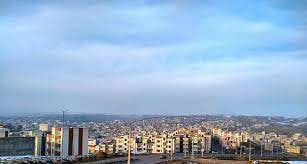
Like many cities in Azerbaijan, Saraskand (Hashtrud) district is located in a mountainous region. The temperature in the city varies from +34 to -20 degrees Celsius. The main occupations of the population of the region are agriculture, animal husbandry and carpet weaving.
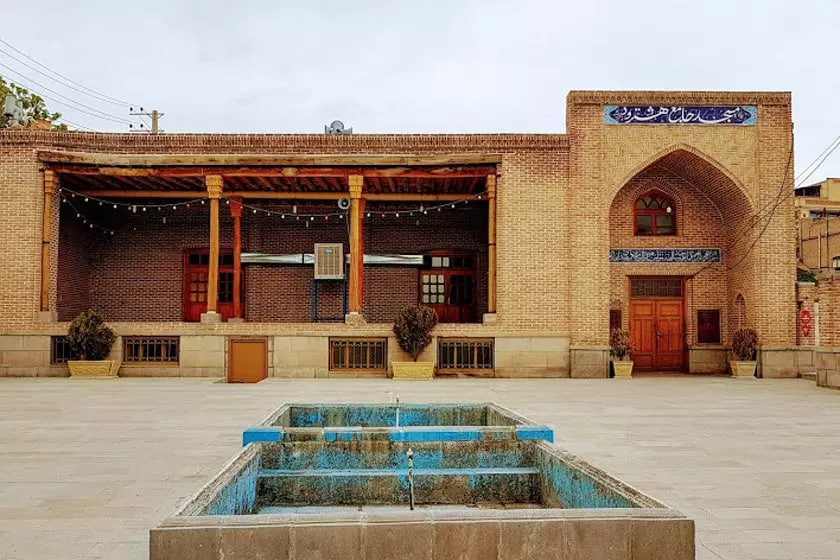
About the name of the city of Saraskand (Hashtrud)
Although we do not have enough information about the oldest name of the city, we know that it was called “Saraskand” until recently. As a result of the Persianization policy implemented and strictly followed in Iran over the past hundred years, the names of many places, mountains, rivers, villages, settlements and cities in South Azerbaijan have been changed. Since we have already talked about this in our previous articles, we will not go into details. Let us just note that the city of Saraskand is also among the places whose name has been subjected to Persianization. Changing the name of a city means tearing it away from its past. In fact, the purpose of the Persianization policy is precisely this: to separate the Turks of South Azerbaijan from their past and to assimilate them into Persian culture. For this purpose, the name of the city of Saraskand has been changed 3 times in the last 100 years. At first, they gave it the name “Rza Shahr”, and then “Azeran”! After a while, they did not like the next name they gave themselves either, and this time they called the city “Hashtrud”! The word Hastrud means 8 rivers in Persian. Those who gave this fictitious name to the city did not even mention that all 8 rivers have Turkish names. However, the names of the rivers flowing in the region (Garangu or Garlangu River, Ay Dogmush, Gizil Ozen, Shor River, Acı River, Kuru River, Leylan River, Gala River, Acirli River, Gare-Gaya River), the towering mountains (Ag Dag, Surmeli) and the lush steppes are all in Azerbaijani Turkish.
“Narın Qala” which tells about the ancient history of Saraskand (Hashtrud) region
20km from Saraskand city, on a hill overlooking the valley of Garangu river from three sides, there is a castle that attracts the admiration of every viewer.
Although in official Iranian sources this castle is called “Zahhak Qala”, the building, known as “Narın Qala” among the local population, has been known by names such as “Ajdehak”, “Gız Qala”, “Dash Qala”, “Baru-as” from time to time. By the way, it is quite remarkable that all of the names are of Turkic origin. In fact, the name “Zahhak” given to this castle is most likely nothing more than a fictional version of the name “Ajdehak”.
According to the ancient Greek historian Herodotus, Ishtovigo or Astyages was the fourth and last king of Media who ruled for 35 years in 585-550 BC. We know that the Median state is one of the oldest states established in Azerbaijan. We have stated that the name “Zahhak” is nothing more than a fictional version of the name “Ajdehak”. This issue is not just a matter of talking about the name of the fortress. These two names have been changed in many historical and literary works. Since it is not related to our topic, we do not see the need to explain the reason here. It should only be said that the word “Ajdehak” is another version of the word “Astiyak”. Although it is generally accepted that the fortress was built during the Arsaglar (Parthian) period (247-224 BC), historical research gives reason to think that it was built in the last years of the Median state.
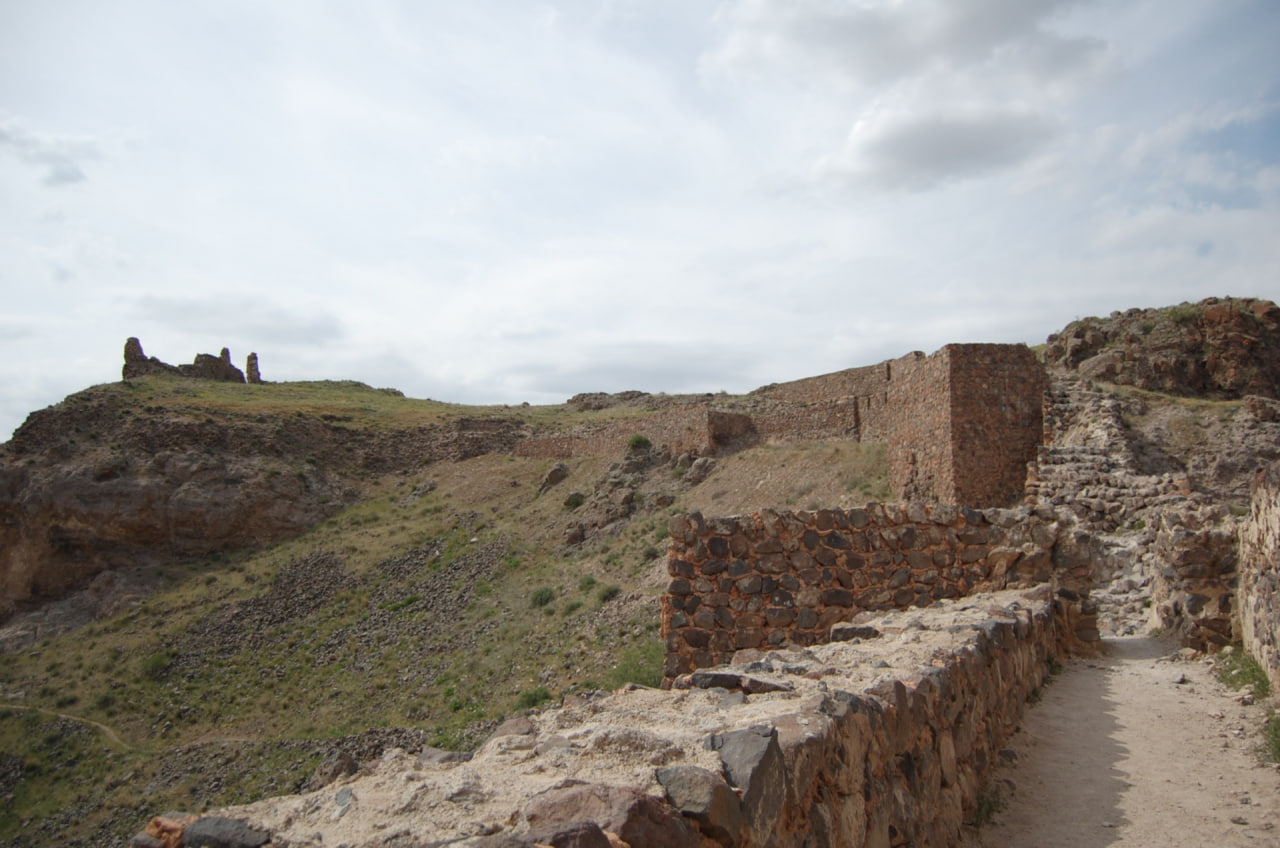
The ancient complex of Naryn Qala, or Astiyak Qala, is approximately 10 km long and 1-2 km wide. The only surviving structure in the complex is a four-arched building, which was destroyed over time and one of its foundations has been restored.
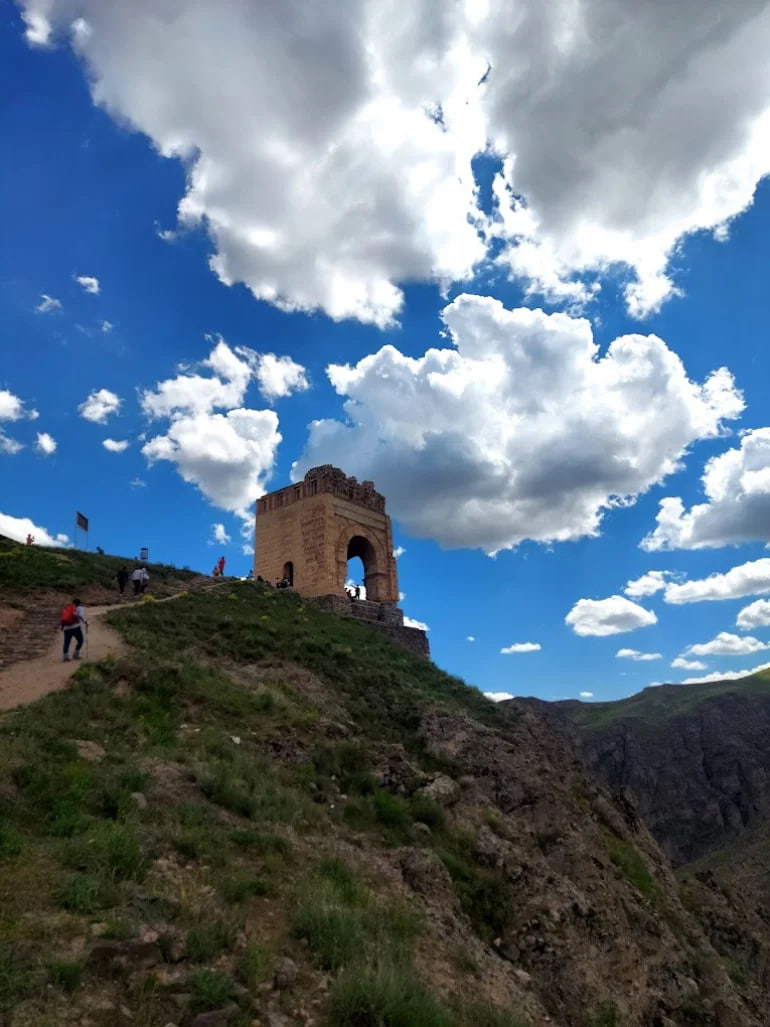
Archaeological excavations have revealed a large hall measuring 11x11 meters with various designs and patterns on its side corridors. These motifs include human and animal, geometric, floral and plant motifs. In addition, a cistern, a mill, a bathhouse and dozens of other artifacts have been discovered in the castle. Half of the castle rooms were dug into the ground, and the other half into the rocks.
Although this castle was most likely built at the end of the Median government, that is, during the Astyages period, it seems that it was also used during the Arsacid (Parthian) period, and even during that period new buildings were added to the complex and existing buildings were restored. Moreover, artifacts from post-Islamic periods have also been found in this ancient site.
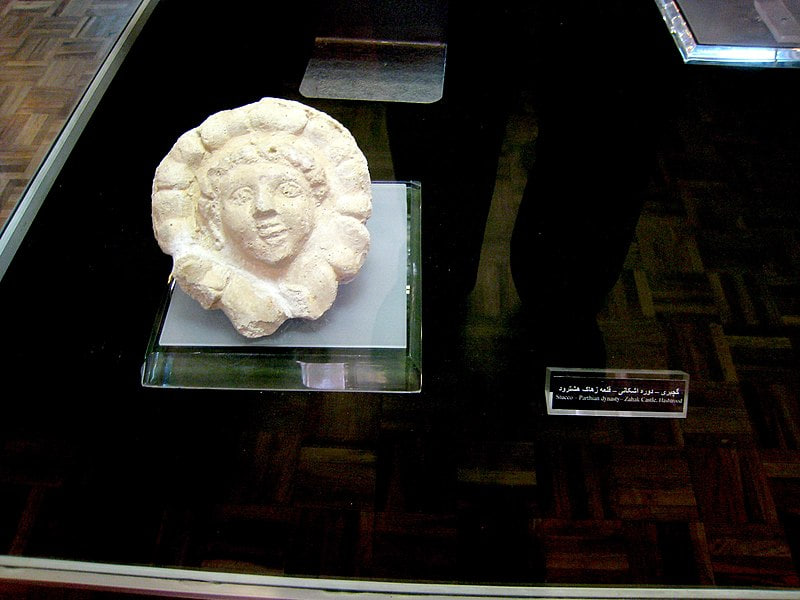
(Artifact from the Arsag period found in Narin Castle)
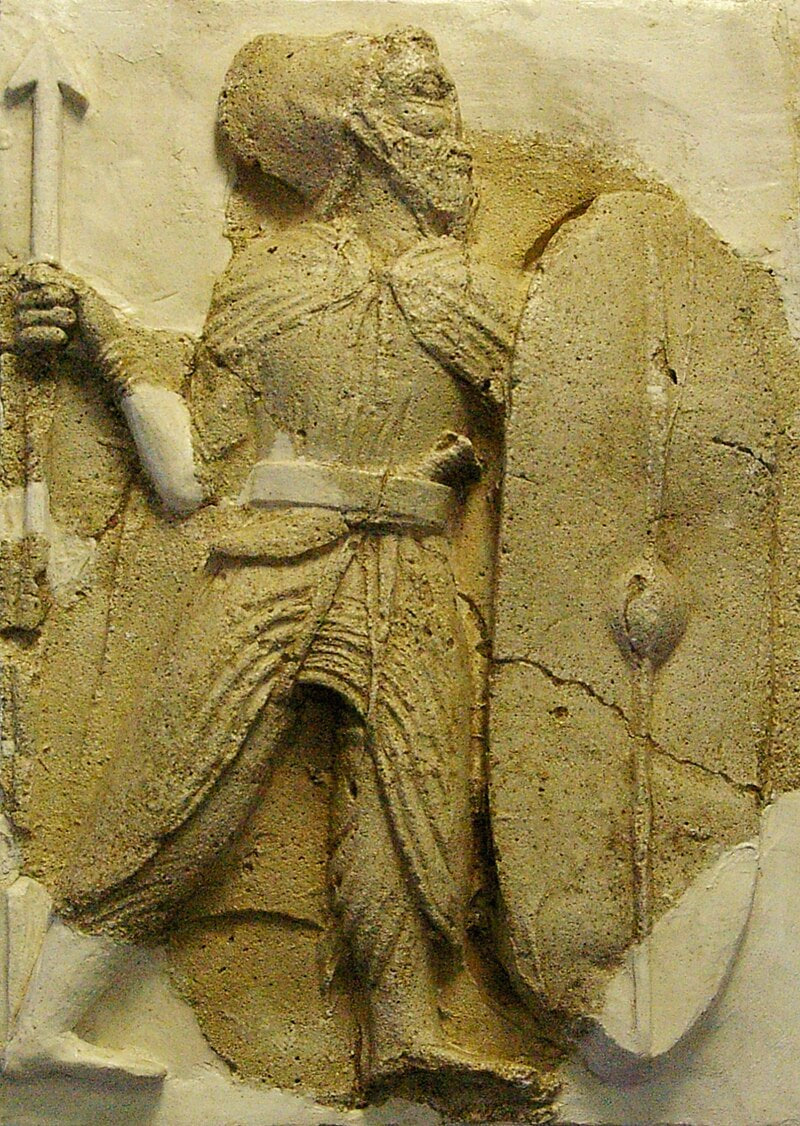
(A very ancient Azerbaijani soldier found in Naryn Qala)
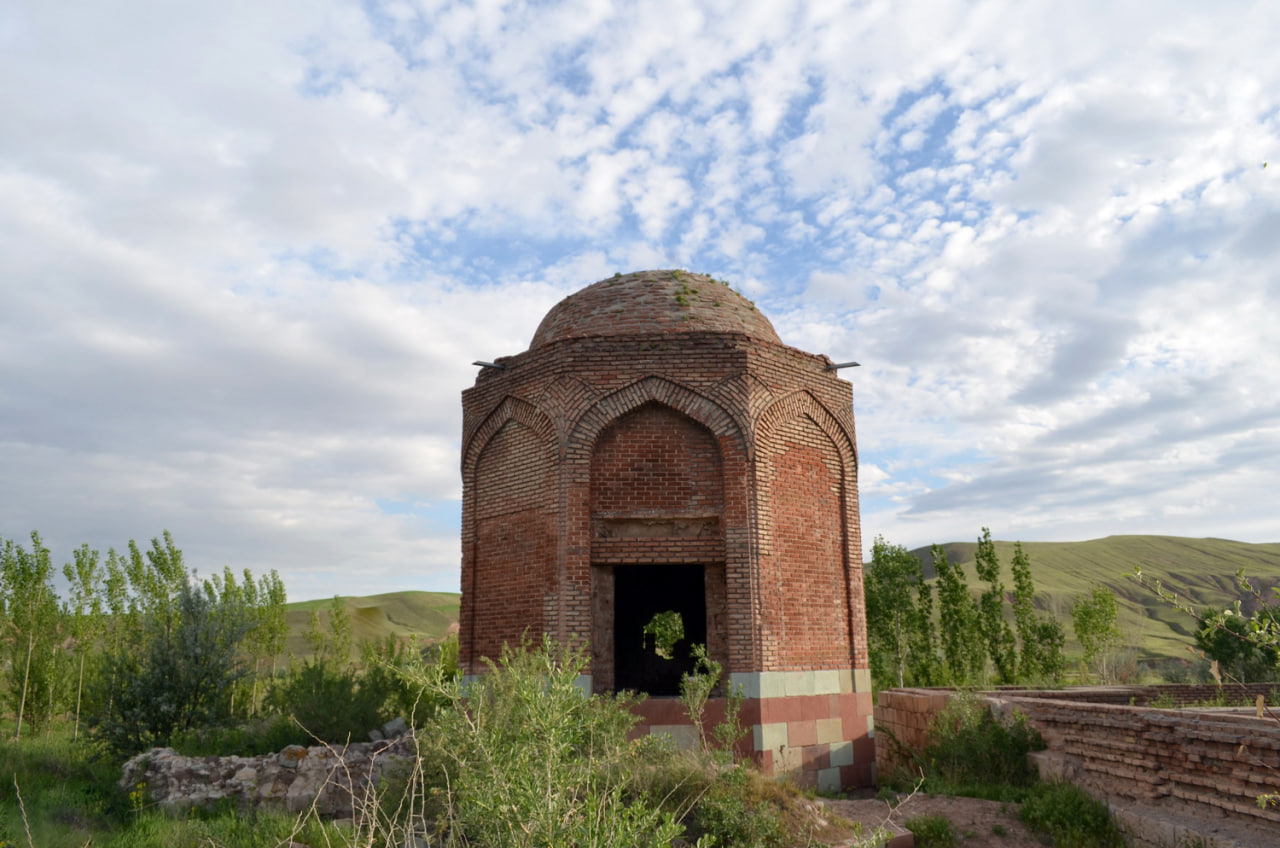
Although Naryn Qala alone is enough to show that the Saraskand region has an ancient history, the history of the region is not limited to this unique work. 10 kilometers west of the city of Saraskand, in a place called Aziz Kendi, there is a valuable historical complex named after Bayezid Bastami. This historical complex had five octagonal domes, of which only one has survived today, while the rest have been completely destroyed. Bayezid Bastami's architecture is similar to the Red Dome of Maragan and the Alevi Dome of Hamedan. The history of the complex dates back to the period of the Mughal Ilkhanids (1256–1335). Unfortunately, like many ancient monuments located in South Azerbaijan, this historical complex has been abandoned to God's mercy, and no work is being done to preserve and renew it.
Azerbaijani-Turkish culture in the Saraskand region:
The Saraskand region, which has a history of about four thousand years, as we have seen above, shows how ancient the history of Azerbaijan is. Its location on the Silk Road, which connected the Eastern world to the Western world for centuries, also shows how developed the culture of this region is, even if we do not have enough information. The region, which was under the rule of Turkish states for about a thousand years after Islam, was under the rule of Azerbaijani-centered Turkish states such as the Azerbaijani Atabeys, the Mogul Ilkhans, the Qaraqoyunlu, the Aq Qoyunlu, and the Safavids for a large part of these thousand years. And it did not forget its past, history, identity, language, and traditions overnight.
No matter how purposefully and systematically the central state in Iran has worked in the last hundred years to Persianize and assimilate the South Azerbaijani Turks, it has not been able to completely erase and destroy the Azerbaijani-Turkish culture that has lasted for thousands of years and the uninterrupted Azerbaijani-Turkish statehood memory that dates back at least a thousand years. The fact that the name was changed three times in a century in South Azerbaijan is an indication of the attempts to destroy Azerbaijani Turkish culture. However, the Azerbaijani Turkish language and culture still live in this region.
Azerbaijani Turkish culture can be seen in the lullabies whispered by mothers to their babies in the Saraskand region and everywhere in South Azerbaijan, in the ancient epics narrated by elders and elders, in proverbs that are the memory of languages, and in bayatis that briefly explain deep-meaning words. As we have written about other cities in South Azerbaijan, customs, fashions and traditions such as Azerbaijani dance and music, performances of ashugs, bayatis, Azerbaijani mughamat, Tuesday evening festivities, Novruz holiday customs, sayachıs, kosa, tekemçıs, Chilla night customs, and the telling of the Koroğlu epic live in this city, so it can be said that Azerbaijaniness and Turkishness still live in this city. However, Azerbaijani-Turkish identity is not only reflected in these. This uniqueness can also be seen in the names of dishes, breads and their preparation methods. These motifs can also be seen in carpets and rugs woven everywhere in our Azerbaijan.
At the same time, today, this new Azerbaijani youth, raised as a result of the efforts of South Azerbaijani writers, poets and cultural figures, is determined to preserve its Azerbaijaniness, culture, history and language, despite all the obstacles and strictness of the central government. This also shows that it is impossible to erase and destroy the Azerbaijani memory from South Azerbaijan and that the policies carried out in this direction are ineffective. Of course, these words mean ignoring the realities and ignoring the negative effects of the assimilation policy.
Source: en.apa.az





 scorpion.az